


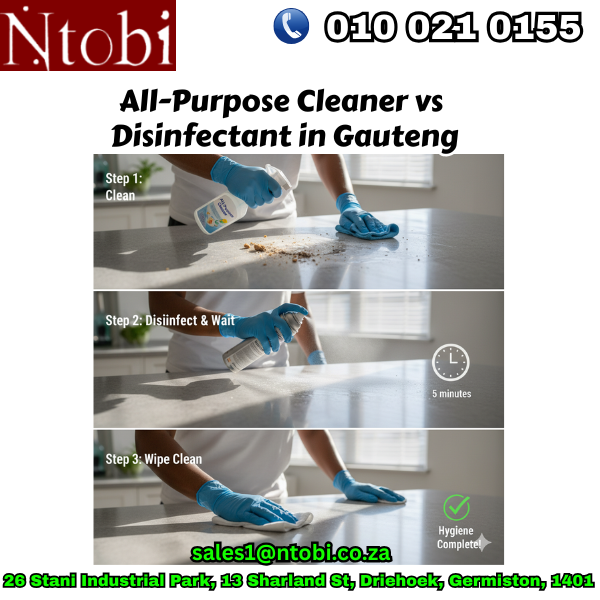
The main difference between All-Purpose Cleaner vs Disinfectant lies in their intended purpose – cleaners remove visible dirt and debris, whilst disinfectants kill microscopic germs and pathogens. In Gauteng’s climate, where dust and pollutants are common, understanding this distinction helps homeowners and businesses choose the right product for each cleaning task. Most people assume one product does everything, but this isn’t quite accurate.
Key Takeaways
| Aspect | All-Purpose Cleaner | Disinfectant |
|---|---|---|
| Primary Function | Removes dirt, grease, and grime | Kills germs, bacteria, and viruses |
| Best Used For | Daily cleaning tasks | High-touch surfaces and illness prevention |
| Contact Time | Immediate wiping | 30 seconds to 10 minutes |
| Safety | Generally safer for regular use | Requires ventilation and careful handling |
| Cost in Gauteng | R25-R80 per litre | R35-R120 per litre |
| Frequency | Daily use recommended | Weekly or as needed |
Ntobi offers a comprehensive range of both cleaning and disinfecting solutions specifically formulated for South African conditions. Their product line includes eco-friendly all-purpose cleaners, hospital-grade disinfectants, toilet cleaning products, and specialised solutions for different surfaces. Based in Gauteng, we’ve seen firsthand how the region’s unique environmental challenges – from Highveld dust to seasonal allergens – require targeted cleaning approaches.
Understanding All-Purpose Cleaners
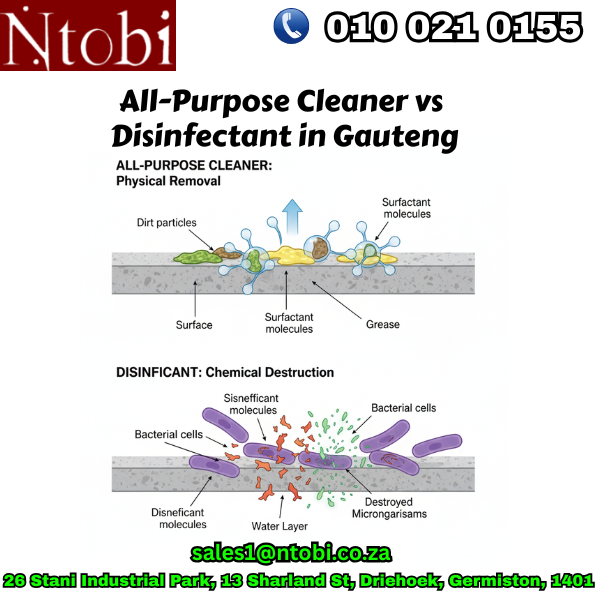
All-purpose cleaners work through surfactants – molecules that break down grease and lift dirt from surfaces. These products excel at removing everyday mess like fingerprints, food spills, and dust buildup. In Gauteng’s dusty environment, they’re particularly useful for maintaining clean surfaces between deep cleaning sessions.
The chemistry behind these cleaners involves reducing surface tension, which allows water to penetrate and dissolve grime more effectively. Most formulations include mild alkaline compounds that neutralise acidic soils without damaging surfaces. This makes them safe for regular use on countertops, appliances, and furniture.
Benefits of All-Purpose Cleaners:
- Safe for daily use on most surfaces
- Cost-effective for routine cleaning
- Easy application with no waiting time
- Suitable for families with young children
- Available in various scents and formulations
We’ve noticed that many Gauteng residents prefer affordable cleaning products that handle multiple tasks. All-purpose cleaners fit this need perfectly, though they won’t eliminate pathogens like flu viruses or food poisoning bacteria.
How Disinfectants Actually Work
Disinfectants contain active ingredients like quaternary ammonium compounds, alcohol, or chlorine-based chemicals that destroy cellular structures of microorganisms. Unlike cleaners that simply remove debris, disinfectants penetrate cell walls and disrupt essential life processes of bacteria, viruses, and fungi.
The effectiveness depends heavily on contact time – most disinfectants need between 30 seconds to 10 minutes on surfaces to achieve their claimed kill rates. This is why you’ll see “dwell time” instructions on product labels. Simply spraying and immediately wiping defeats the purpose entirely.
Key Disinfectant Categories:
- Quaternary Ammonium: Effective against bacteria and some viruses
- Alcohol-based: Quick action but evaporates rapidly
- Chlorine compounds: Broad spectrum but can bleach surfaces
- Hydrogen peroxide: Breaks down into water and oxygen
In Gauteng’s healthcare facilities and food service establishments, proper disinfection protocols are mandatory. The disinfectant liquid cleaner uses and benefits vary significantly based on the active ingredient concentration and intended application.
Cost Analysis for Gauteng Consumers
Product pricing in Gauteng varies considerably based on brand, concentration, and distribution channels. All-purpose cleaners typically cost R25-R80 per litre, whilst disinfectants range from R35-R120 per litre. However, dilution ratios affect the actual cost per use significantly.
| Product Type | Average Price | Dilution Ratio | Cost Per Application |
|---|---|---|---|
| Basic All-Purpose | R35/litre | 1:10 | R0.32 |
| Premium All-Purpose | R65/litre | 1:20 | R0.33 |
| Hospital Disinfectant | R95/litre | 1:50 | R0.19 |
| RTU Disinfectant | R85/litre | Ready-to-use | R0.85 |
Many Gauteng businesses find concentrated products more economical despite higher upfront costs. Proper dilution equipment becomes essential for maintaining effectiveness whilst controlling expenses. We’ve seen facilities reduce cleaning costs by 40% through strategic product selection and staff training.
When to Use Each Product Type
The decision between cleaning and disinfecting depends on the situation, surface type, and contamination risk. In most homes, all-purpose cleaners handle 80% of cleaning tasks effectively. Disinfectants become necessary for high-risk areas or after illness outbreaks.
Use All-Purpose Cleaners For:
- Daily kitchen and bathroom maintenance
- Dusting furniture and electronics
- Cleaning windows and mirrors
- Removing food spills and stains
- General office and workspace maintenance
Use Disinfectants For:
- Toilet bowls and bathroom fixtures
- Kitchen cutting boards and sinks
- Door handles and light switches
- During and after illness in the household
- Areas contaminated with bodily fluids
Gauteng’s seasonal flu patterns, typically peaking during winter months, require increased disinfection frequency in shared spaces. Schools and offices often implement enhanced protocols between May and August.
Surface-Specific Recommendations
Different surfaces require different approaches, and this becomes particularly important in Gauteng’s diverse building materials and furnishings. Stone countertops, popular in many Gauteng homes, can be damaged by acidic cleaners but respond well to pH-neutral all-purpose solutions.
Hard Surfaces (Tiles, Countertops):
- Daily: All-purpose cleaner
- Weekly: Disinfectant with appropriate contact time
- Avoid: Abrasive cleaners on natural stone
Soft Surfaces (Upholstery, Carpets):
- Regular: Vacuum and spot cleaning
- Occasional: Fabric-safe disinfectant sprays
- Professional: Deep cleaning every 6-12 months
Electronics and Appliances:
- Use alcohol-based cleaners sparingly
- Never spray directly onto devices
- Microfibre cloths prevent scratching
We’ve observed that many Gauteng residents use incorrect products for specific surfaces, leading to damage or ineffective cleaning. Natural stone surfaces, common in upmarket areas like Sandton and Rosebank, require particular care.
Health and Safety Considerations
Chemical exposure risks differ significantly between cleaners and disinfectants. All-purpose cleaners generally pose minimal health risks when used as directed, whilst disinfectants require more careful handling due to their biocidal nature.
Safety Precautions for Disinfectants:
- Always ensure adequate ventilation
- Wear gloves during extended use
- Never mix different chemical products
- Store away from children and pets
- Read and follow label instructions completely
Gauteng’s altitude and dry climate can intensify chemical vapours, making ventilation even more critical. We’ve noticed increased respiratory complaints in poorly ventilated spaces where strong disinfectants are used regularly.
Common Mixing Mistakes to Avoid:
- Bleach + Ammonia = Toxic chloramine gas
- Bleach + Rubbing alcohol = Chloroform formation
- Hydrogen peroxide + Vinegar = Unstable oxygen release
Professional cleaning services in Gauteng typically use colour-coded systems to prevent accidental mixing and ensure appropriate product selection for each task.
What is the Difference Between a Disinfectant and a Cleaner?
The fundamental difference lies in their mechanisms of action and intended outcomes. Cleaners physically remove soil, grease, and debris through mechanical action and chemical dissolution. They make surfaces look clean and remove most organic matter that could harbour bacteria.
Disinfectants chemically destroy microorganisms through various mechanisms – disrupting cell membranes, denaturing proteins, or interfering with cellular metabolism. They don’t necessarily remove visible dirt, which is why cleaning before disinfecting produces better results.
Key Distinctions:
| Aspect | Cleaners | Disinfectants |
|---|---|---|
| Action | Physical removal | Chemical destruction |
| Target | Visible soil and debris | Invisible microorganisms |
| Result | Clean appearance | Reduced pathogen load |
| Speed | Immediate effect | Requires contact time |
| Regulation | Consumer products | Often regulated as pesticides |
Many Gauteng consumers expect one product to do both jobs effectively. Whilst some products claim dual action, they’re typically compromised in both functions. Professional facilities almost always separate cleaning and disinfecting steps for maximum effectiveness.
When Should You Not Use All-Purpose Cleaner?
All-purpose cleaners have limitations that many people don’t realise. They’re formulated for general use, which means they may be too mild for tough jobs or too harsh for delicate materials. Understanding these limitations prevents damage and ensures effective cleaning.
Avoid All-Purpose Cleaners On:
- Natural stone surfaces (marble, granite, limestone)
- Waxed or sealed wood floors
- Antique or delicate fabrics
- Electronics with exposed circuits
- Surfaces requiring pathogen elimination
Situations Where They’re Insufficient:
- After handling raw meat or poultry
- During gastroenteritis outbreaks
- Cleaning up bodily fluids
- Preparing surfaces for food contact
- Medical or childcare environments
In Gauteng’s restaurant industry, health inspectors specifically look for appropriate product use. Using all-purpose cleaners in food preparation areas can result in health code violations, particularly for surfaces that contact ready-to-eat foods.
We’ve seen costly mistakes where inappropriate cleaner use damaged expensive surfaces or failed to meet regulatory requirements. Professional training becomes essential for commercial facilities.
Does All-Purpose Cleaner Get Rid of Bacteria?
All-purpose cleaners reduce bacterial counts through physical removal rather than chemical killing. They can remove up to 99% of bacteria by washing them away with soil and debris, but they don’t actually kill the microorganisms. This distinction becomes crucial in high-risk environments.
The mechanical action of wiping with an all-purpose cleaner disrupts biofilms and removes most bacteria along with the dirt they’re attached to. However, any remaining bacteria continue to multiply under favourable conditions.
Bacterial Reduction Methods:
| Method | Mechanism | Effectiveness |
|---|---|---|
| All-purpose cleaning | Physical removal | 90-99% reduction |
| Disinfection | Chemical killing | 99.9-99.99% kill |
| Heat treatment | Protein denaturation | Near 100% kill |
| UV light | DNA damage | Variable effectiveness |
In Gauteng’s warm climate, bacterial growth rates increase significantly. Surfaces cleaned with all-purpose products can return to high bacterial levels within hours if conditions are favourable. This is why hospitals and food service facilities require chemical disinfection protocols.
Research shows that cleaning alone reduces bacterial transmission by approximately 80%, whilst combining cleaning with disinfection achieves 99%+ reduction. For most household applications, this difference isn’t critical, but it becomes essential in healthcare settings.
Is it Better to Clean or Disinfect?
The answer depends entirely on your specific needs, risk factors, and circumstances. For most residential applications, regular cleaning provides adequate hygiene whilst being safer and more economical. Disinfection becomes necessary when pathogen elimination is critical.
Factors Influencing the Decision:
- Presence of vulnerable individuals (elderly, immunocompromised)
- Recent illness in the household
- Food preparation areas
- Bathroom and toilet facilities
- Frequency of use and traffic levels
The Ideal Approach – Sequential Cleaning:
- Pre-clean to remove visible soil and debris
- Disinfect high-risk areas with appropriate contact time
- Rinse if required by product instructions
- Regular maintenance with appropriate cleaners
Most Gauteng healthcare facilities follow strict protocols requiring both steps. Cleaning first improves disinfectant effectiveness by removing organic matter that can neutralise active ingredients.
We recommend a risk-based approach – use all-purpose cleaners for routine maintenance and reserve disinfectants for high-risk situations. This balances effectiveness, safety, and cost whilst maintaining appropriate hygiene standards.
Frequently Asked Questions
Can I make my own all-purpose cleaner at home?
Yes, simple formulations using dish soap, vinegar, and water work for basic cleaning. However, commercial products often provide better performance and consistency. Avoid mixing different homemade ingredients without understanding chemical interactions.
How long do disinfectants remain effective on surfaces?
Most disinfectants provide residual activity for only minutes to hours after application. Quaternary ammonium compounds may provide slightly longer protection, but recontamination occurs rapidly through normal use.
Are eco-friendly cleaners as effective as conventional ones?
Plant-based and eco-friendly cleaners can be highly effective for removing soil and debris. However, they typically don’t provide antimicrobial activity equivalent to chemical disinfectants. Choose based on your specific cleaning requirements.
What’s the best cleaning routine for a busy Gauteng household?
Daily cleaning with all-purpose products for maintenance, weekly disinfection of bathrooms and kitchen sinks, and monthly deep cleaning of high-traffic areas. Adjust frequency based on household size and activity levels.
Should I use different products for different rooms?
Yes, bathrooms require more frequent disinfection, kitchens need food-safe products, and living areas typically need only regular cleaning. Ntobi’s range includes products specifically formulated for different applications.
For more information about professional cleaning products and services in Gauteng, contact Ntobi or visit their online shop.
Search Reference: All-purpose cleaner vs disinfectant Gauteng – Ntobi Cleaning Solutions

Leave a Reply