



Finding reliable toilet cleaning products in Gauteng doesn’t need to drain your budget or confuse you with endless options. The province offers numerous suppliers stocking everything from basic bleach-based cleaners to specialised limescale removers, with Ntobi Cleaning providing a comprehensive range of commercial-grade and household toilet cleaning products across Johannesburg, Pretoria, and surrounding areas. Whether you’re maintaining office facilities, managing rental properties, or simply keeping your home hygienic, affordable solutions exist that actually work without the premium price tags attached to imported brands.
Most Gauteng residents face hard water issues, which means limescale buildup becomes a constant battle. You’ll find that local suppliers stock both acid-based cleaners for tough mineral deposits and milder options for regular maintenance. Ntobi Cleaning offers professional consultation to help you choose products that match your specific water conditions and usage patterns, because what works in Sandton’s newer plumbing might not suit older systems in central Johannesburg.
Key Takeaways
- Local Availability: Gauteng has widespread distribution of toilet cleaning products through retail chains, wholesalers, and specialist suppliers like Ntobi Cleaning
- Product Types: Options include bleach-based cleaners, acid-based descalers, eco-friendly alternatives, and disinfectant tablets
- Price Range: Affordable products start from basic bleach solutions to mid-range commercial cleaners suitable for high-traffic facilities
- Hard Water Solutions: Acid-based cleaners (hydrochloric or phosphoric acid) work best for Gauteng’s mineral-heavy water
- Safety Standards: All recommended products comply with SABS regulations and include proper hazard labelling
- Bulk Buying: Commercial quantities offer significant savings for property managers and cleaning contractors
Types of Toilet Cleaning Products Available
Bleach-based cleaners remain the most common choice across Gauteng households because they’re cheap and kill most bacteria on contact. You’ll see brands like Domestos and Jik on nearly every supermarket shelf, but generic versions from Makro or Game often contain identical active ingredients (sodium hypochlorite at 3-5% concentration) for less money. These work fine for regular cleaning where there isn’t heavy staining or limescale.
Acid-based cleaners target the mineral deposits that bleach can’t touch. Hydrochloric acid products (usually at 9-10% concentration) dissolve limescale quickly, which you need if your toilet bowl has that brownish ring below the waterline. Ntobi Cleaning stocks both phosphoric acid alternatives (safer for septic systems) and stronger hydrochloric formulations for commercial applications where cleaning speed matters. The smell is harsh, ventilation becomes essential, and you cannot mix these with bleach under any circumstances.
Disinfectant Blocks and Tablets
These products sit in the cistern or clip to the bowl rim, releasing cleaning agents with each flush:
- Cistern blocks dissolve slowly, providing continuous mild disinfection
- Rim blocks often contain dye to show when they need replacement
- Enzymatic tablets break down organic matter in the pipes
- Chlorine tablets offer strong disinfection but may damage rubber seals over time
Eco-friendly options have grown popular in Gauteng’s more environmentally conscious suburbs. Plant-based cleaners using citric acid, essential oils, and biodegradable surfactants clean effectively without the harsh chemical smell. They cost more upfront but appeal to families with small children or people on septic systems. Ntobi Cleaning’s eco-range includes locally manufactured options that perform well in standard residential applications, though they struggle with severe limescale compared to acid-based products.

Where to Buy in Gauteng
Retail chains like Makro, Builders Warehouse, and Game stock the basics at competitive prices. You’ll pay slightly more at Pick n Pay or Checkers for convenience, but their house brands often represent good value. Johannesburg’s CBD has several wholesale suppliers along Commissioner Street where cleaning companies buy in bulk, though you might need to purchase minimum quantities (usually 12 units).
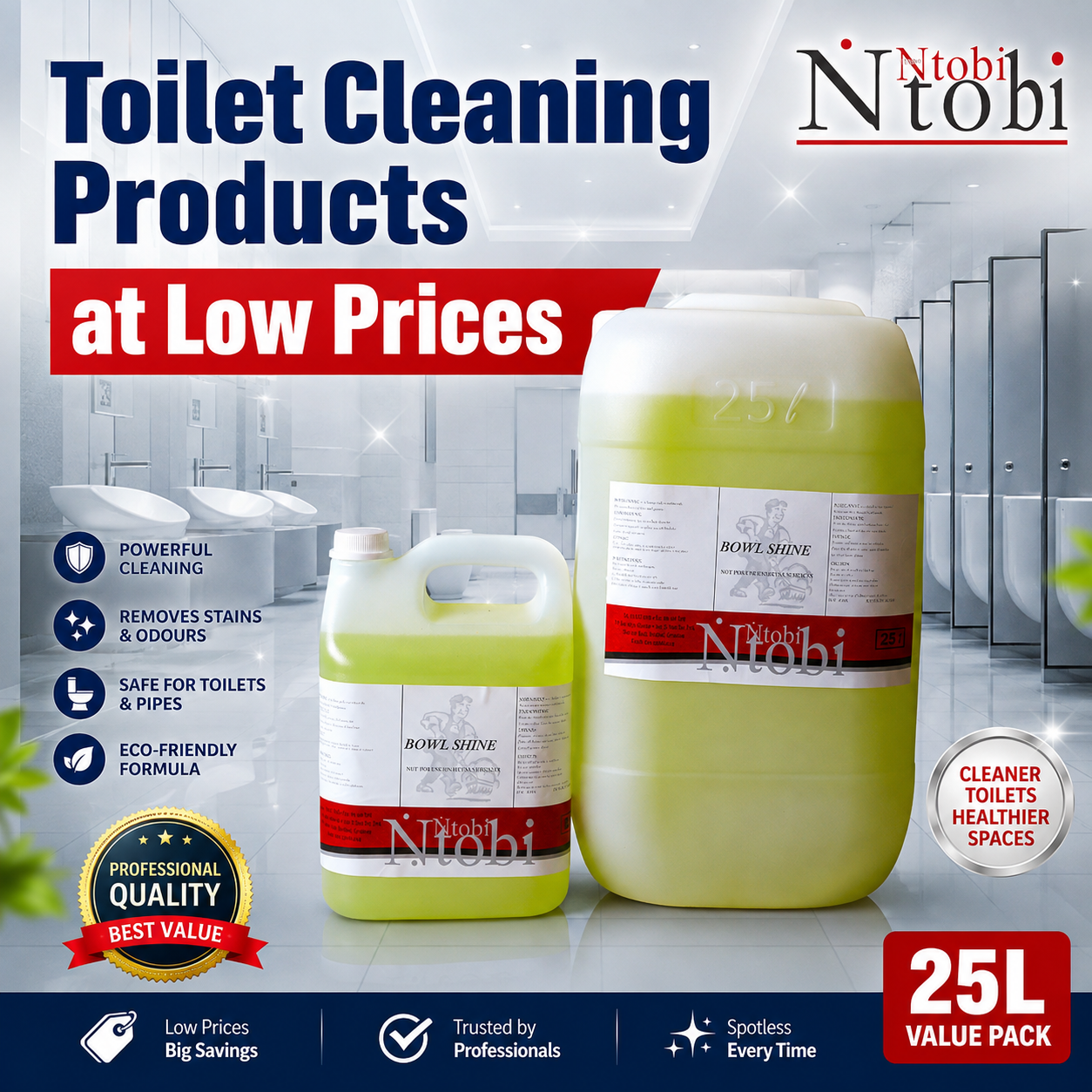
Ntobi Cleaning operates delivery services across Gauteng’s major metros, which saves you the hassle of transporting heavy containers. Their product range covers everything from 750ml household bottles to 25-litre drums for commercial facilities, property management companies, and cleaning contractors. Prices drop significantly when buying larger formats or placing regular standing orders.
Online options have expanded recently. Takealot and Makro’s online store deliver to most Gauteng addresses within 2-3 days. Ntobi Cleaning’s online platform offers same-day delivery in certain areas and provides technical datasheets for each product, which helps when you need to comply with workplace health and safety documentation requirements.
Choosing Products for Different Needs
Residential homes need two products maximum: a bleach-based cleaner for weekly maintenance and an acid descaler for monthly deep cleaning. Buying 5-litre containers instead of 750ml bottles cuts costs by about 40% over a year. Store them safely away from children and pets, preferably in their original containers with labels intact.
Office buildings and commercial properties require stronger formulations because of higher usage. Ntobi Cleaning recommends commercial-grade cleaners with higher active ingredient concentrations, plus urinal descalers for male facilities. Monthly consumption varies wildly based on foot traffic, but a typical office floor with 50 people uses roughly 3-4 litres of toilet cleaner per month.
Properties with septic tanks need special consideration. Chlorine bleach in high concentrations kills the bacteria breaking down waste in the septic system. Enzymatic cleaners or products specifically labelled as septic-safe prevent this problem. Gauteng’s outlying areas around Midrand, Centurion, and rural parts of Tshwane often use septic systems rather than municipal sewerage.
Safety and Storage Considerations
Chemical burns from toilet cleaners send more people to Gauteng emergency rooms than you’d think. Always wear gloves when handling concentrated products, open windows for ventilation, and never pour one product directly onto another in the toilet bowl. The chlorine gas produced by mixing bleach with acid can cause serious respiratory damage.
Storage requirements:
- Keep in cool, dry areas away from direct sunlight
- Never decant into unmarked containers
- Store acids and alkalis separately (different shelves or cabinets)
- Check expiry dates; old bleach loses effectiveness
- Lock away from children, even in commercial settings
Ntobi Cleaning provides Material Safety Data Sheets (MSDS) for all products, which employers legally need to keep on file. These documents explain first aid procedures, safe handling practices, and environmental precautions. If you’re managing cleaning staff, basic training on chemical safety prevents accidents and potential legal issues.
Hard water across most of Gauteng contains high levels of calcium and magnesium. This means you’ll need descaling products more frequently than people living in softer water areas. Test your water hardness if you’re unsure, Builders Warehouse sells simple test strips. Very hard water (above 180 ppm) needs weekly acid cleaning to prevent buildup, while moderate hardness (60-120 ppm) can stretch to fortnightly treatments.
Frequently Asked Questions
What’s the cheapest effective toilet cleaner in Gauteng?
Generic bleach from Makro or Shoprite (sodium hypochlorite 5%) costs about one-third the price of branded alternatives and cleans just as effectively for regular maintenance. Add white vinegar for light descaling between acid treatments.
How often should I deep clean with acid-based products?
Weekly for very hard water areas, fortnightly for moderate hardness. If you see brown staining appearing within days of cleaning, your water needs more frequent treatment or a stronger acid concentration.
Are expensive imported cleaners worth the money?
Rarely for basic toilet cleaning. The active ingredients in R150 imported products are usually identical to R35 local brands. You’re paying for packaging and marketing. Ntobi Cleaning’s locally sourced products contain the same chemicals at better prices.
Can I make my own toilet cleaner to save money?
Baking soda mixed with vinegar creates a mild cleaner suitable for light jobs, but it won’t kill bacteria or remove heavy limescale. For proper disinfection and descaling, commercial products contain concentrations you can’t safely replicate at home.
Do eco-friendly cleaners work in Gauteng’s hard water?
They struggle with heavy limescale. Use them for regular cleaning between monthly acid treatments. The citric acid in eco products handles light scale but lacks the strength for Gauteng’s mineral-heavy water without excessive scrubbing.
What size container offers best value?
5-litre containers typically cost 35-40% less per litre than 750ml bottles. Ntobi Cleaning’s bulk options reduce costs further, with 25-litre drums offering up to 60% savings for commercial buyers or households buying cooperatively with neighbours.
How do I dispose of old cleaning products safely?
Never pour concentrated chemicals down drains in large quantities. Dilute with water first, or take to hazardous waste collection points at larger Gauteng municipalities. Johannesburg, Tshwane, and Ekurhuleni run collection days for household chemicals.
Leave a Reply